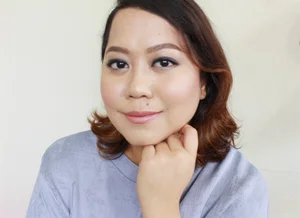
Are you in your glow up era but don’t know where to start? Most people would go to an aesthetic clinic and get some sort of treatment, but I think that’s too temporary of a solution. The real key to a glow up is money AND time. As much as we all want a short cut, the best way to improve our face is to work on our entire body. This could take months, and then you need to keep the habit, but it’s worth it if you want a real glow up that will hold over time and not just until your next clinic appointment.
Here’s what I recommend, knowing what I know after 18 years in the beauty industry. I wish someone jammed this into my head earlier.

First, the gym and your food
This is the part nobody wants to hear and the part I'd call non-negotiable. If you want your skin and hair to change, you have to work out regularly, both strength and cardio, and you have to eat properly. It sounds unrelated to beauty but it really isn't.
When you exercise, your blood circulates harder and more often, which means more oxygen and nutrients get delivered to your skin and your scalp. That's the simple mechanical reason your face looks better after a workout, and over months it adds up to skin that heals faster and looks more even. The less obvious reasons matter more. Regular exercise lowers cortisol, the stress hormone, and cortisol is one of the things that pushes your oil glands to overproduce and your hair follicles to shed early. It also improves how your body handles insulin.
Insulin and the growth factors that travel with it drive sebum production and inflammation, which is why acne so often tracks with blood sugar and weight. Strength training in particular helps with this, and it helps regulate your hormones overall, which for a lot of women is the actual root of their breakouts. Exercise also makes you sleep better, and your skin repairs itself while you sleep; women who sleep poorly show more signs of skin aging and recover more slowly from barrier damage. None of this is dramatic. It's just how the body works.
Nutrition is the other half. Your hair is made of protein, and so is the collagen in your skin, so if you aren't eating enough of it, your body prioritizes the organs that keep you alive and your hair and skin get what's left. Low iron, low zinc, and low vitamin D all show up as hair shedding and dull, slow-healing skin, and these are common deficiencies, especially if you've been dieting. On the other side, diets heavy in sugar and refined carbs are linked to worse acne in study after study, and for some people dairy is too. Healthy fats, the kind in fish and nuts and good oil, keep your skin barrier intact so it holds moisture and doesn't react to everything.
So eat enough protein, eat your vegetables, cut back on the sugar, drink water. Lift something a few times a week and get your heart rate up on the other days. This will take months to show but it is the foundation everything else sits on.
Second, a dermatologist
Forget the influencers. I mean that kindly, because I've been one of the people recommending products for most of my adult life. But if your skin has a problem that keeps coming back, you need a doctor to look at it, not a content creator with a yellow basket.
A dermatologist will examine your skin and ask about your history. In some cases they'll send you for bloodwork, because what's showing up on your face is often coming from somewhere else: your hormones, your thyroid, a deficiency. Once they know what's actually going on, the product recommendations they give you will work, because they're matched to your skin and not to an algorithm. You might also need medication.
I was on antibiotics for a while to calm my acne down. After that, I went on isotretinoin for six months. I did this under the care of Doc Erin Tababa-Santos of The Nerdy Derma, and I'm grateful to her because she helped my skin recover from terrible adult acne that years of good skincare had done nothing for. Isotretinoin is a serious drug and it needs proper supervision and monitoring, which is exactly why you go to a derma for it. But I want to say clearly that it is not a last resort to be whispered about. For skin that won't respond to anything else, it is often the answer. As Doc Erin likes to say, it’s the gold standard for acne care.
A consultation will cost you less than a thousand pesos. It's still cheaper than the drawer of half-used serums most of us have.
Third, and last, treatments
Ulthera, Botox, lasers, the whole aesthetic clinic menu really work. They can change the texture and even the shape of your face almost immediately, and I've had lasers done myself as part of my recovery. I'm not against any of it.
But do this last. Go through the first two steps properly before you book anything at a clinic, and give them real time to work. There's a reasonable chance you won't need as much as you think you do. When you lose weight, your face changes. When your hormones balance out, your skin calms down and your texture improves on its own. When you've been lifting for a year, you carry yourself differently. A lot of what people want to fix with a treatment is something the first two steps will fix more slowly and more permanently, and for much less money.
Then, if there's still something you want to address, go. You'll be going in with healthy skin on a healthy body, and the treatment will have much less to do.
So that's the glow up. It’s months Months of exercise and decent food, finding a doctor who actually examines you, and treatments as a last option. It's not a fun answer. But it's the one that worked for me, after a long time of trying everything else.